
Scale Service, Calibration and Testing in Serbia
Scale Service Calibration and Testing Weight Testing in Serbia
Scale Service Serbia for Analytical and Precision Balances
Why Scale Service Serbia Matters for Stable Weighing Results
Scale Service Serbia for Warehouse, Counting, and Industrial Scales
Service for analytical, precision, warehouse, counting, specific gravity, and hydrostatic balances, including cleaning, spare part replacement, adjustment, and accuracy control.
Scale Service Serbia for Routine Control, Calibration, and Repair
Our scale service Serbia support is designed for laboratories, production, storage, and technical weighing applications that require reliable and repeatable results. Scale service Serbia can include cleaning, diagnostics, spare part replacement, adjustment, and performance checks depending on the balance type and operating environment. For users who rely on analytical and precision balances every day, scale service Serbia is especially important when readings drift, stabilization becomes slow, or repeatability is no longer trustworthy. We also provide scale service Serbia for warehouse scales, counting scales, and selected special weighing systems where proper operation, stability, and routine control are essential for daily work.
In practical use, a good service approach is not limited to repair alone. It also includes proper leveling, environmental checks, accuracy control with suitable reference weights, and realistic recommendations for future maintenance. This helps users keep the instrument functional, reduce downtime, and maintain confidence in weighing results.
LABServis provides support for different types of balances and mass measurement systems — from routine maintenance and cleaning to corrective service, calibration, and testing with appropriate reference weights according to the application and required level of accuracy. We work with analytical and precision balances, industrial and warehouse scales, counting scales, specific gravity balances, and selected hydrostatic systems, with a focus on measurement stability, repeatability, functionality, and dependable long-term operation.
What balance support includes
Regular inspection, cleaning, basic adjustment, and performance control.
Fault diagnostics, part replacement, and restoring the balance to functional condition.
Accuracy control using appropriate reference weights and working procedures.
Support when a balance drifts, becomes unstable, or is essential for daily work.
Which balances we service, adjust, and check
We work with laboratory and industrial weighing systems for different applications. The scope of support depends on the balance design, readability, operating environment, and user requirements. For more sensitive systems, we place special focus on environmental stability, leveling, repeatability, and proper use of reference weights.
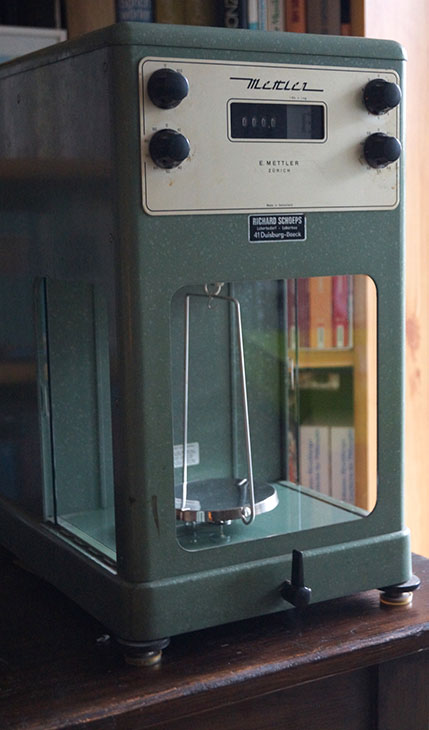
Analytical Balances
Service of draft shields, weighing systems, internal adjustment functions, leveling, displays, and accuracy control for highly sensitive laboratory work.
Precision Balances
Adjustment, calibration, cleaning, and replacement of parts for routine laboratory, production, and quality control weighing tasks.
Warehouse and Platform Scales
Inspection of platforms, indicators, cables, connectors, load cells, power supplies, and basic system performance in warehouse and logistics environments.
Counting Scales
Service and control of piece-counting scales with focus on repeatability, reference sample weight, display stability, and indicator performance.
Specific Gravity Balances
Support for systems used to determine density and specific gravity, including inspection of accessories, vessels, holders, and basic weighing stability.
Hydrostatic Balances
Service of selected hydrostatic systems and accessories, including inspection of mechanical elements, operating stability, and supporting components.
E1, E2, F1, F2, and M1 weight classes in balance adjustment and control
For verification, adjustment, and accuracy control, we use appropriate reference and working weights according to the balance type and required accuracy level. The choice of weight class depends on whether the application involves an analytical, precision, or more robust industrial balance, as well as the weighing range and the actual process requirements.
E1 and E2
For very precise checks, fine laboratory systems, and more demanding control procedures.
F1 and F2
For routine laboratory and technical control, precision balances, and regular service procedures.
M1
For more robust applications, industrial and warehouse scales, and broader working control in practice.
What we can do on a balance and weighing system
Mechanics, electronics, and spare parts
- inspection of load cells and sensors
- checking displays, keyboards, and electronics
- replacement of power supplies, cables, and connectors
- replacement of worn or damaged parts
- basic functional diagnostics of the system
Cleaning, leveling, and stability
- cleaning of working and sensitive balance parts
- inspection of draft shields and pans
- leveling and working position control
- checking the effect of vibration and environment
- repeatability and reading stability checks
Calibration, testing, and accuracy control
- accuracy control using appropriate weights
- adjustment according to the balance application and range
- linearity and basic repeatability checks
- service documentation and performance overview
- recommendations for future checks and maintenance
Drift, instability, relocation, and routine control
With balances, problems often appear through small but important deviations: the reading drifts, repeatability is poor, the balance stabilizes too slowly, leveling is incorrect, the display does not work properly, or the system has been exposed to shock, dust, overload, or relocation. In laboratories and production, this directly affects work quality, internal control, and process reliability.
That is why users request service when a balance no longer inspires confidence in the result, when routine accuracy control is required, or when the instrument must be prepared for audit, internal checks, or continued daily use. In such cases, we first make a realistic technical assessment and then provide a clear recommendation on what makes sense to clean, adjust, service, or replace.
A simple process for balance service and accuracy control
Contact and requirement description
Send the balance type, model, capacity, readability, and a short description of the problem or requirement.
Technical assessment
We determine the condition of the instrument, the required intervention level, and the appropriate scope of accuracy control.
Service, cleaning, and adjustment
We carry out cleaning, part replacement, leveling, adjustment, and functional checks of the weighing system.
Calibration and further support
If needed, we continue with accuracy checks, periodic maintenance, and future interventions.
Balance service, calibration, testing, and technical support
LABServis supports analytical, precision, warehouse, counting, hydrostatic, and selected special balances through diagnostics, preventive maintenance, cleaning, spare part replacement, adjustment, and accuracy control with appropriate reference weights. If your balance drifts, becomes unstable, or needs routine performance control, send us the basic information about the instrument and your requirement.
I am text block. Click edit button to change this text. Lorem ipsum dolor sit amet, consectetur adipiscing elit. Ut elit tellus, luctus nec ullamcorper mattis, pulvinar dapibus leo.